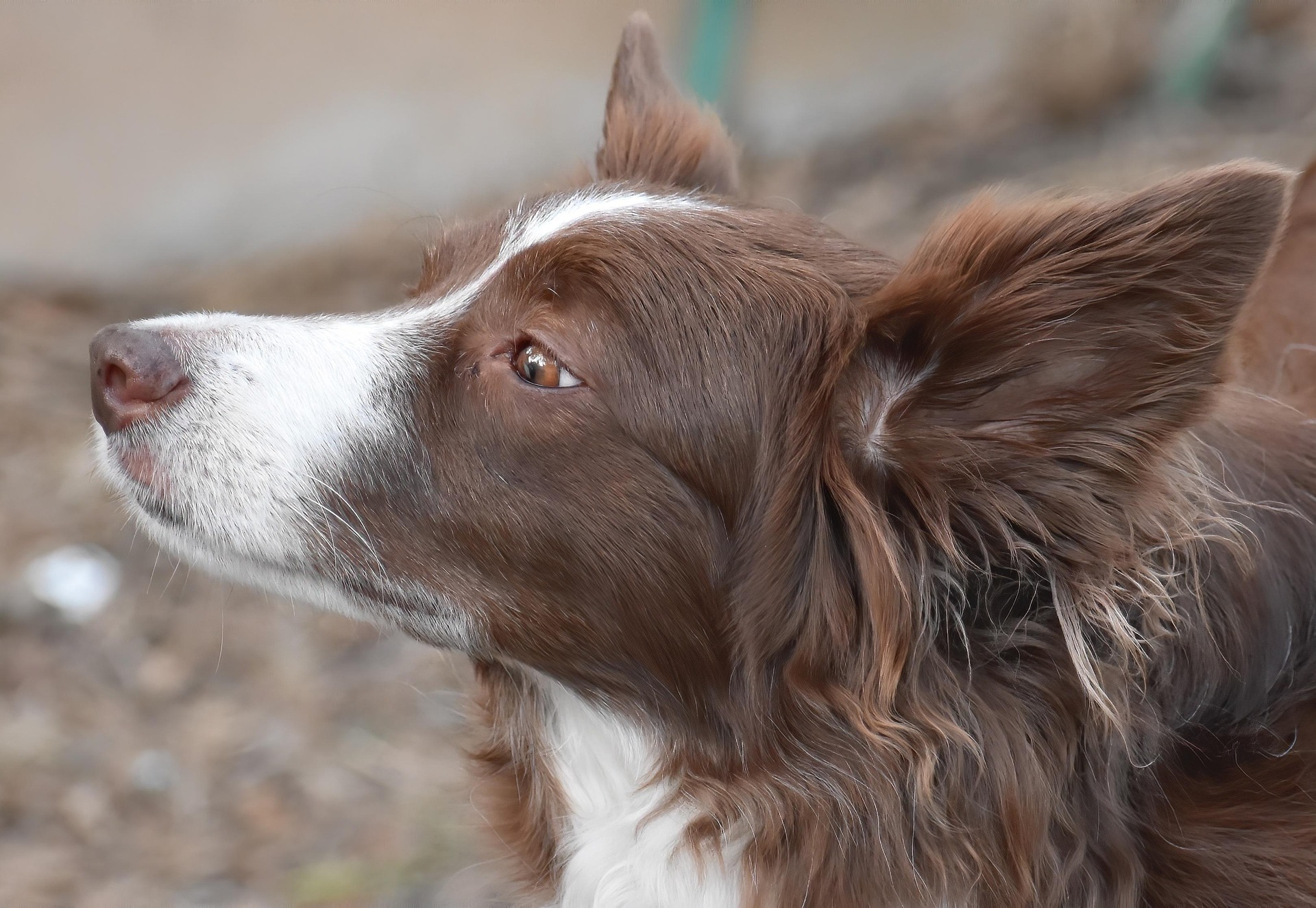
Have you ever spoken to your dog in a high-pitched voice, only to watch them instantly tilt their head completely sideways to one side? This adorable, quizzical gesture is an everyday routine that every pet parent watches in absolute delight, yet it hides a fascinating biological secret. Your dog isn’t just trying to strike a cute pose or mimic a confused human; they are actually executing an ancient sensory tracking sequence designed to maximize their hearing and visual focus. This endearing animal behavior triggers massive curiosity among owners and drives millions of organic Google searches from people looking to decode their pet’s physical communication style.
Three Core Facts Every Owner Must Know
- The Muzzle Obstruction: Detailed scientific studies published in veterinary behavior journals confirm that a dog’s physical snout blocks the lower half of their vision. When a dog tilts their head sideways, they are shifting the position of their muzzle out of their direct line of sight, allowing them to clearly read the lower micro-expressions on a human face, such as your mouth when you speak.
- The Audio Locator: Unlike humans who can pinpoint sounds perfectly with stationary ears, a dog’s ears are positioned closely together on top of their head. By tilting their skull at an angle, they change the altitude of their ear canals, allowing them to calculate the exact distance, pitch, and location of an unmoving or high-pitched sound with microscopic precision.
- The Empathy Connection: Aligning their ears and eyes to focus completely on your voice releases positive social hormones in their central nervous system. Data shows that highly empathetic, human-bonded dogs perform the head tilt far more frequently than distant dogs because they are actively trying to process your emotional state and isolate familiar words like treat, walk, or ball.
Fascinating Behavioral Discoveries and Scent Secrets
Beyond the basic physical alignment mechanics, researchers tracking domestic canine habits have uncovered several mind-blowing truths about the head-tilt ritual. Canines possess a highly advanced neural processing network that connects their outer ear muscles directly to the part of the brain that controls facial expressions and vocal responses. Interestingly, scientists have discovered that a dog’s head tilt is a clear indicator of advanced cognitive processing. When your dog hears a complex sentence, their brain must separate background household noise from human words. The tilt physically adjusts their outer pinnae to catch the exact sound frequency of your voice, filtering out low-frequency ambient sounds like a running refrigerator or traffic outside. Furthermore, statistics prove that dogs with longer snouts, such as German Shepherds and Greyhounds, execute the head tilt significantly more often than flat-faced, brachycephalic breeds like Pugs or Bulldogs. This is because flat-faced dogs do not suffer from severe muzzle vision obstruction, proving that the gesture is a highly calculated physical tool used to see you better.
What Should You Do?
The best thing you can do as an owner is lean into the moment and continue talking to them using positive reinforcement. If you praise your dog, laugh, or offer a high-value treat when they tilt their head, you are actively validating their focus, which strengthens their desire to listen closely to your commands. You should never startle or scold a dog while they are intensely focused on your voice, as sudden loud noises can shock their highly sensitive auditory canals. Let them finish their natural sensory check completely, and appreciate the deep evolutionary bond that allows an entirely different species to study your vocal inflections so carefully.
The Quick Assessment Blueprint
- Normal Behavior: Tilting their head smoothly to the left or right exclusively when you speak, squeak a toy, or make a strange high-pitched noise. The dog remains alert, active, happy, and returns their head to a straight position the second the sound stops.
- Boredom Behavior: Tilting their head back and forth continuously at a blank wall or a quiet corner of the room during the day. This is a primary indicator of chronic under-stimulation, a lack of daily physical walks, or advanced environmental boredom.
- Medical Warning: A permanent, constant tilt where the dog’s head remains permanently stuck sideways even when resting, eating, or walking. If this physical tilt is accompanied by loss of balance, walking in circles, or rapid flicking of the eyes, it points to a severe medical emergency like vestibular disease or a deep inner ear infection rather than a normal behavioral listening trait.
When dogs tilt their heads sideways, they are shifting their snouts to eliminate a blind spot in their lower vision while simultaneously adjusting their ear placement to locate the exact direction and pitch of your voice. This ancestral tracking reflex allows the canine brain to process human micro-expressions and isolate favorite training words with incredible accuracy. Owners should reward this harmless and loving display of focus, as it reinforces deep social bonding and active listening. However, any permanent, non-stop head tilt paired with limping, stumbling, or dizziness is a symptom of advanced inner ear infection or vestibular disease that requires an immediate veterinary diagnostic check.
© 2026 bffpuppy. All Rights Reserved.
Disclaimer: The information on bffpuppy is for educational and entertainment purposes only. We are not veterinarians, animal behaviorists, or licensed medical professionals. The content on this site is not a substitute for professional veterinary advice, diagnosis, or treatment. A sudden, permanent onset of a head tilt, an inability to stand up straight due to severe neurological distress, or a tilt accompanied by localized ear scratching, foul odors from the ears, or rhythmic eye shaking requires an immediate veterinary assessment. bffpuppy will not be held responsible or liable for any injuries, systemic illnesses, or actions taken based on the information provided in our articles. Always consult a qualified veterinarian regarding the specific physical health, auditory safety, or behavioral tracking needs of your canine companion.