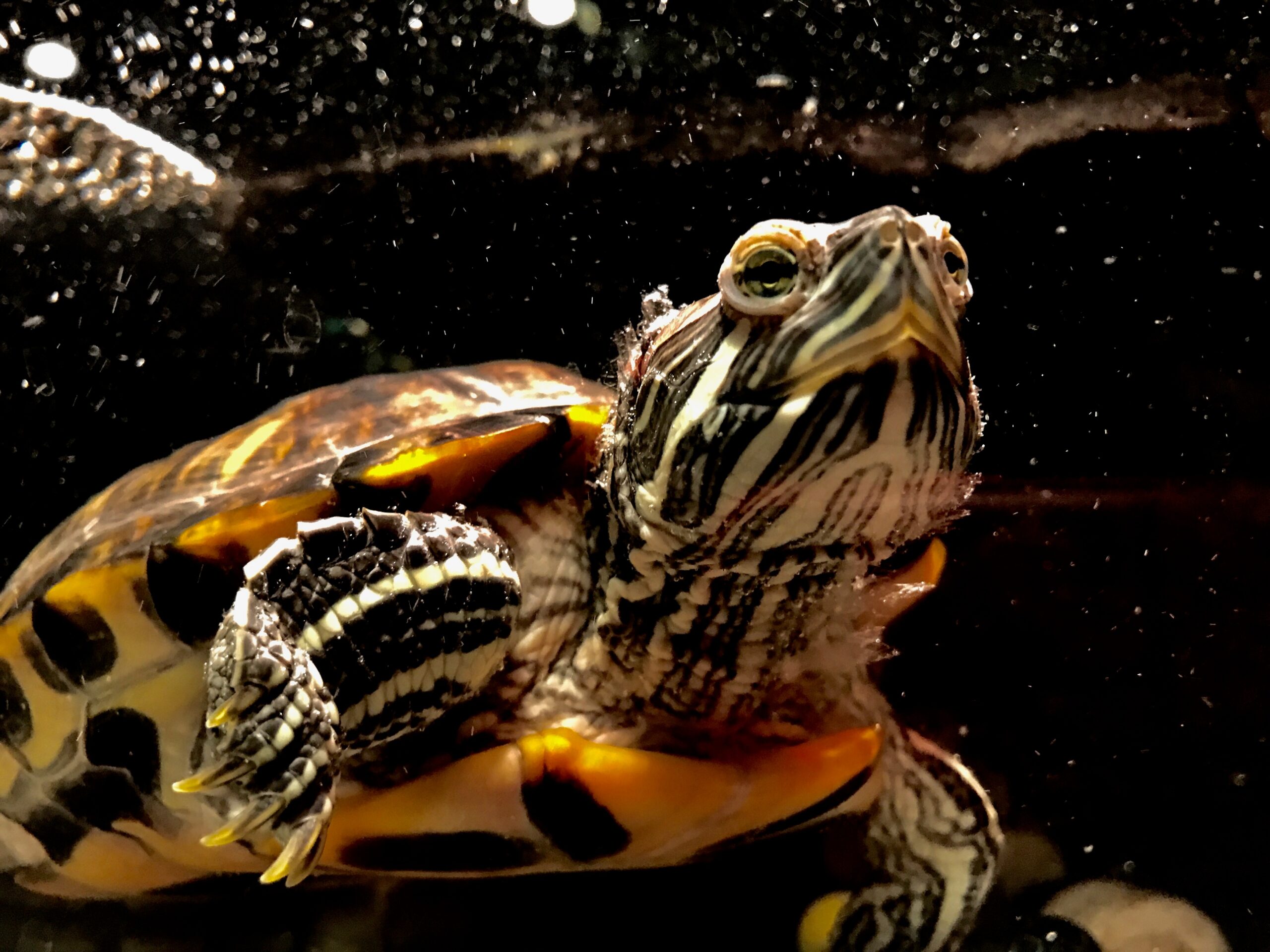
It is one of the most frightening moments an exotic pet keeper can experience: you look into your red-eared slider’s aquatic terrarium, and your usually active turtle is completely stationary. They are resting at the bottom of the tank or tucked inside a hollow log shell, their eyes tightly closed, and their limbs limp. If you gently nudge them, they barely respond.
Discovering your pet in this completely motionless state causes instant panic. It is natural to worry that your reptile has drowned, suffered a catastrophic respiratory infection, or passed away silently overnight.
While a completely still turtle requires an immediate environment check, it is frequently a response known as brumation—the reptile equivalent of mammalian hibernation. To help you evaluate your pet’s health, this comprehensive guide explains the biological mechanisms behind turtle inactivity, the dangerous tank design flaws that freeze their metabolism, and how to safely manage a dormant reptile.
Decoding the Ectothermic Shutdown: The 4 Reasons for Turtle Inactivity
Because turtles are ectothermic animals, they cannot internally generate their own body heat. Their behavior, heart rate, and cellular digestion are controlled entirely by the ambient temperature of their habitat. When a red-eared slider stops moving, it is almost always a survival reaction to one of these environmental triggers:
1. Seasonal Brumation Triggers
In the wild ponds of North America, red-eared sliders survive freezing winter temperatures by burying themselves in mud at the bottom of waterways and entering brumation. Their heart rate drops to just a few beats per minute, and they stop eating entirely. If your indoor enclosure experiences a drop in ambient room temperature or a reduction in daily lighting hours during winter, your turtle’s biological clock will automatically trigger this deep slowdown phase, causing them to remain completely still for weeks.
2. Incorrect Basking and Water Temperatures
Many new owners do not realize that water temperature and basking air temperature must be managed separately. If your water heater breaks or your overhead heat bulb loses its thermal strength, the water drops below 70°F (21°C). At this temperature, a turtle’s digestive enzymes stop working entirely. They will stop swimming, refuse food, and sit motionless because their bodies lack the thermal energy required to move their muscles.
3. Advanced Respiratory Infections
If your turtle is completely inactive but you notice they are floating crookedly in the water (lopsided swimming), gasping for air, or blowing tiny bubbles from their nose, they are not hibernating. They are fighting an advanced respiratory infection, which is a medical emergency. This illness causes fluid buildup in their lungs, draining their physical energy and making it painful or impossible for them to dive and swim normally.
4. Extreme Vitamin A Malnutrition
Feeding a red-eared slider a diet consisting solely of commercial dried shrimp or generic pet store pellets leads to nutritional deficiencies. A lack of Vitamin A causes the delicate lining of their eyelids to swell completely shut, forming a hard white crust. A turtle that is temporarily blinded cannot hunt or find its basking platform. They will retreat to the bottom of the enclosure and remain completely stationary out of defense and exhaustion.
Is Your Turtle Hibernating or Dead?
Determining if a cold-blooded animal is alive during a deep metabolic shutdown requires specific checks. Never assume a still turtle has passed away without performing these physical assessments:
- The Tail Reflex: Gently pinch the fleshy area of the tail near the back leg. A brumating turtle will slowly pull its tail in closer to its shell. A deceased turtle will show zero muscle movement.
- The Basking Platform Test: Take the turtle completely out of the cold water and place them directly under a warm basking light for 30 minutes. If they are alive, the localized infrared heat will slowly restart their metabolism, causing them to open their eyes or stretch out their neck.
- The Plastron Pulse: Turn the turtle over and look closely at the soft skin bridges connecting the top shell (carapace) to the bottom shell (plastron) right above the back legs. During brumation, you can see a very slow, rhythmic pulse indicating a beating heart.
The Habitat Correction System: How to Safely Revive Your Slider
If your turtle is in a deep, temperature-induced sleep but shows signs of life, do not violently shake them or place them in hot water. Sudden thermal shifts cause severe cardiovascular shock. Implement this safe environmental warming routine instead:
Audit and Calibrate the Thermal Gradient
Measure your tank temperatures using a digital probe thermometer. Adjust your hardware setup to meet these strict, non-negotiable red-eared slider safety parameters:
- Water Temperature: Keep it consistently between 75°F and 78°F (24°C to 26°C) using a submersible heater.
- Basking Dock Temperature: Keep it between 85°F and 90°F (29°C to 32°C) using a focused halogen heat bulb.
Fix the Vital Lighting Arrangement
Turtles require daily exposure to ultraviolet radiation to process nutrients and maintain active behaviors. Install a high-quality linear UVB tube bulb right alongside your heat lamp over the dry basking dock. Keep these lights turned on for exactly 12 hours during the day and turn them completely off at night to establish a stable, natural circadian rhythm.
Perform a Clean Water Reset
Poor water quality allows harmful pathogens to multiply, attacking a turtle’s respiratory system and lowering their energy. Use a heavy-duty canister filter rated for double your tank’s actual water volume to remove waste. Complete a 25% water change every single week using fresh water that has been treated with a reptile-safe dechlorinator to protect their eyes from chemical irritation.
© 2026 All Rights Reserved.
Disclaimer: The information provided on this website is for educational and informational purposes only. We are not licensed veterinarians, herpetologists, or wildlife medical professionals. The content on this site is not intended to be a substitute for professional exotic veterinary advice, diagnosis, or treatment. Reptiles and aquatic turtles possess complex, highly specialized biological systems and precise environmental requirements that vary heavily by age and species. This website will not be held responsible or liable for any injuries, illnesses, pet loss, or actions taken based on the information provided in our articles. Always consult a qualified exotic veterinarian regarding the specific health, habitat layout, or medical needs of your reptile.
Leave a Reply